Launch offer — valid today only

📄 Digital book in PDF · read it on your phone or print it

US Bookkeeping, From Double Entry to Year-End Close, in Drawings Every Entry in the Same 4 Steps

Double entry, sales tax, payroll from gross to net, depreciation, accruals, bank reconciliation, the trial balance and year-end statements. One topic per page: a drawing, a worked example line by line and an exercise with the full solution. Starts from the basics, written for the US. 65 illustrated pages.

START PRACTICING THIS WAY

🔒 Secure checkout · PDF by email · 30-day guarantee

Every topic, its own pageThe 4-step entry method drawn, with the explanation right beside it
65 illustrated pages8 parts, from the accounting equation to the year-end checklist
Up-to-date sourcesCurrent IRS publications, state revenue departments and the FASB Codification
PDF by emailFormat

Look Inside the Book

Every page has one big drawing and a box with the steps and numbers you need to know:

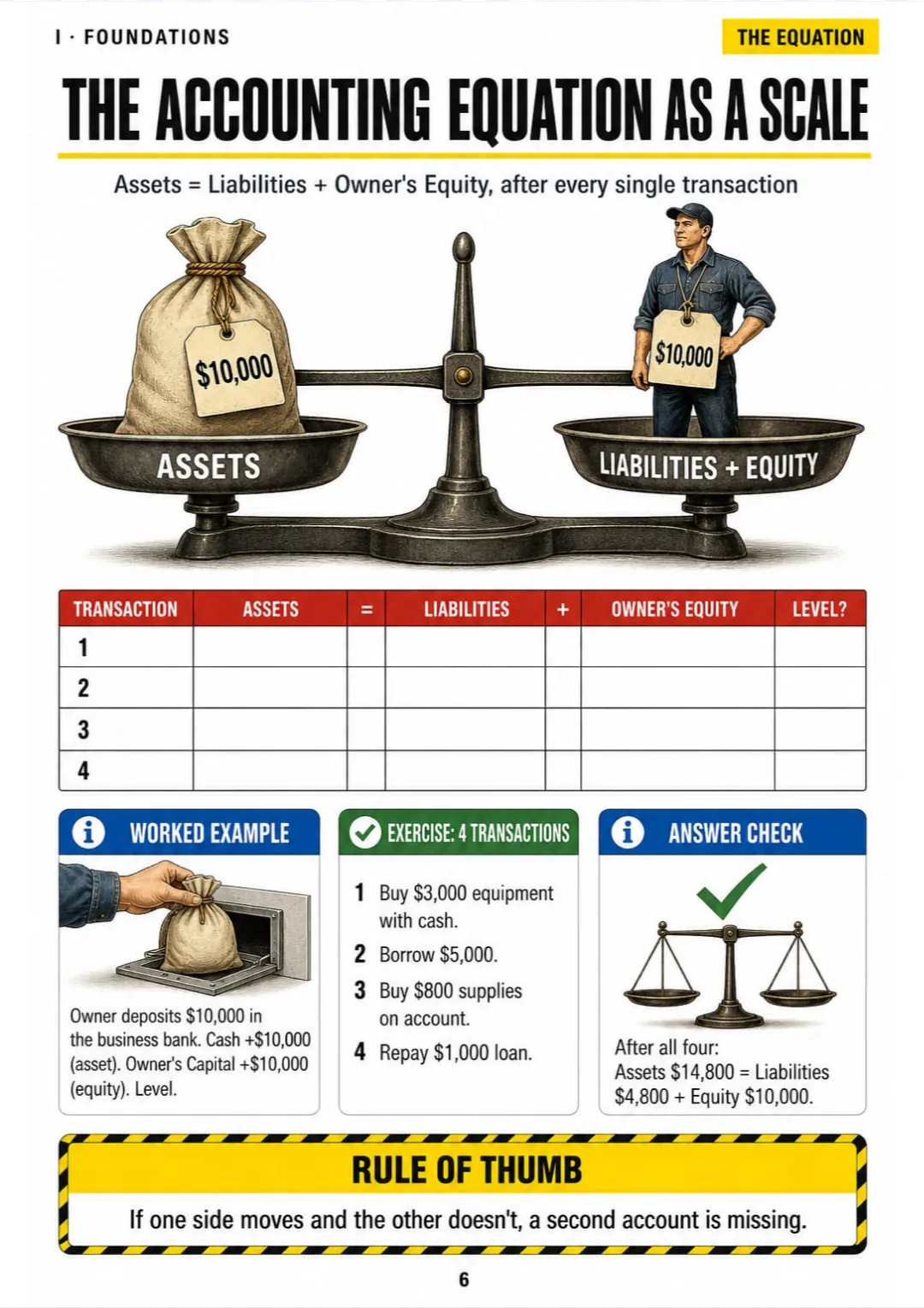
Owner puts in $10,000: both sides rise by $10,000
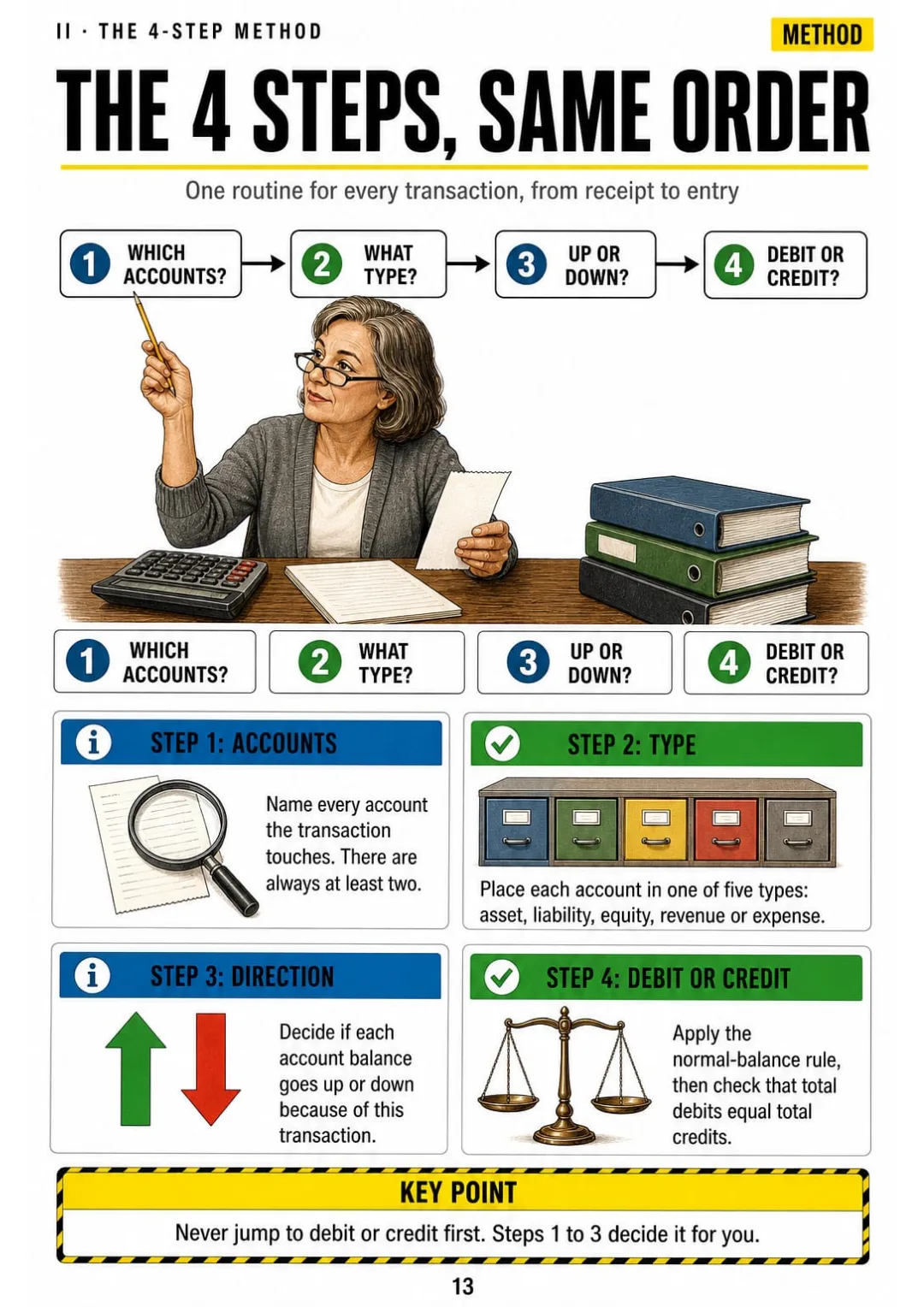
4 boxes used on every page: which accounts, what type, up or down, debit or credit
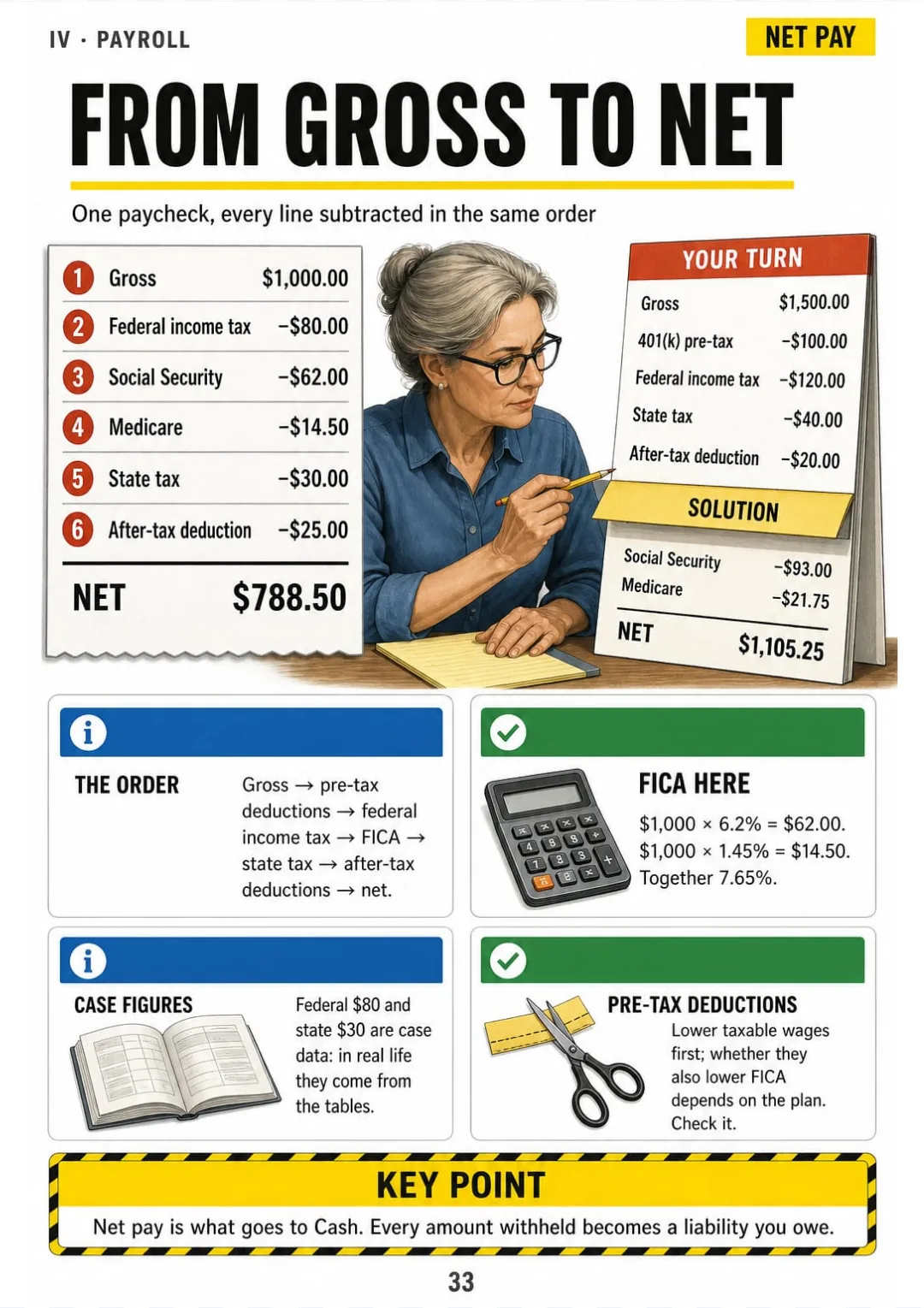
Gross $1,000 − tax, FICA, state, deductions = net $788.50
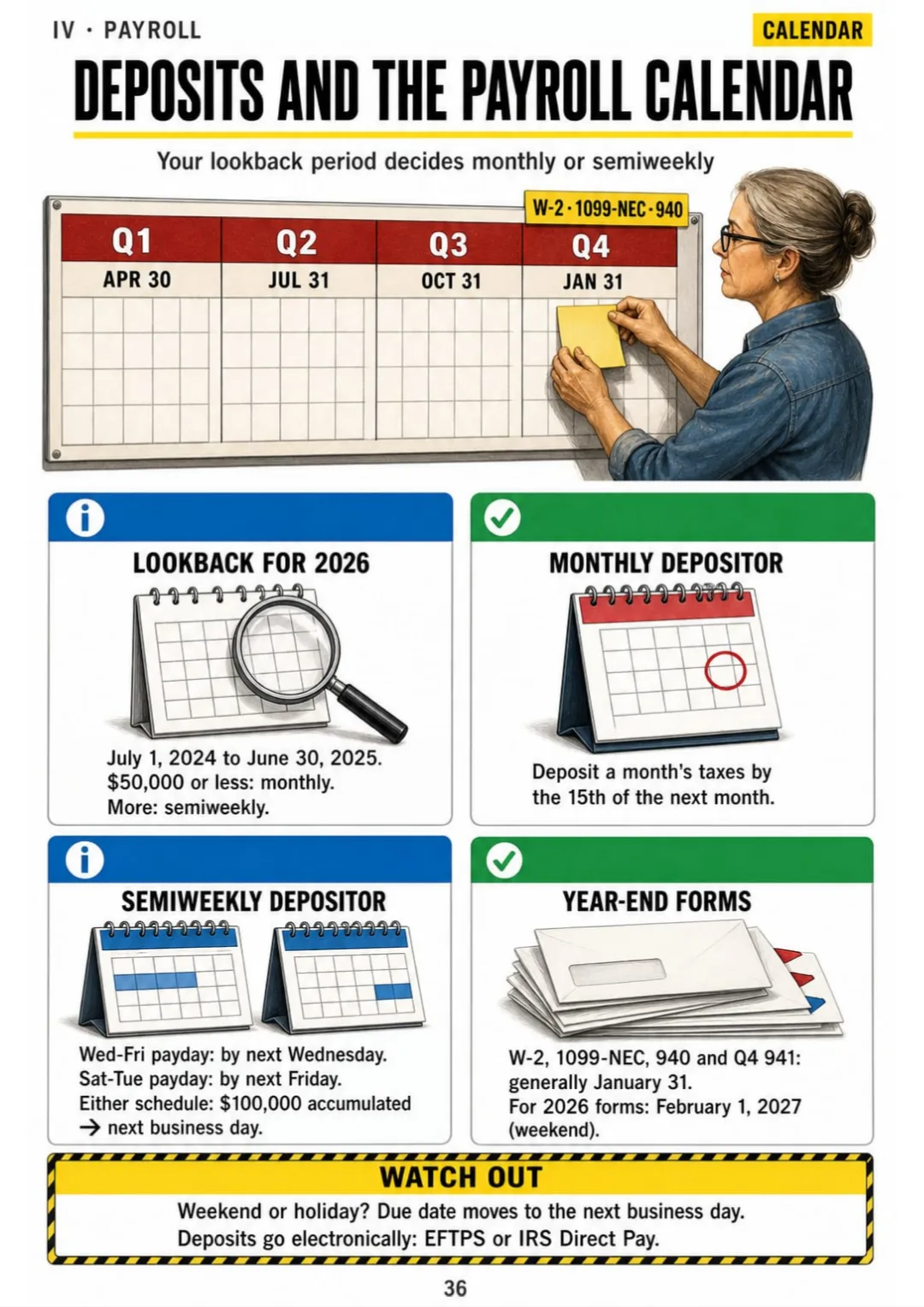
Form 941: Apr 30 · Jul 31 · Oct 31 · Jan 31, plus deposit rules
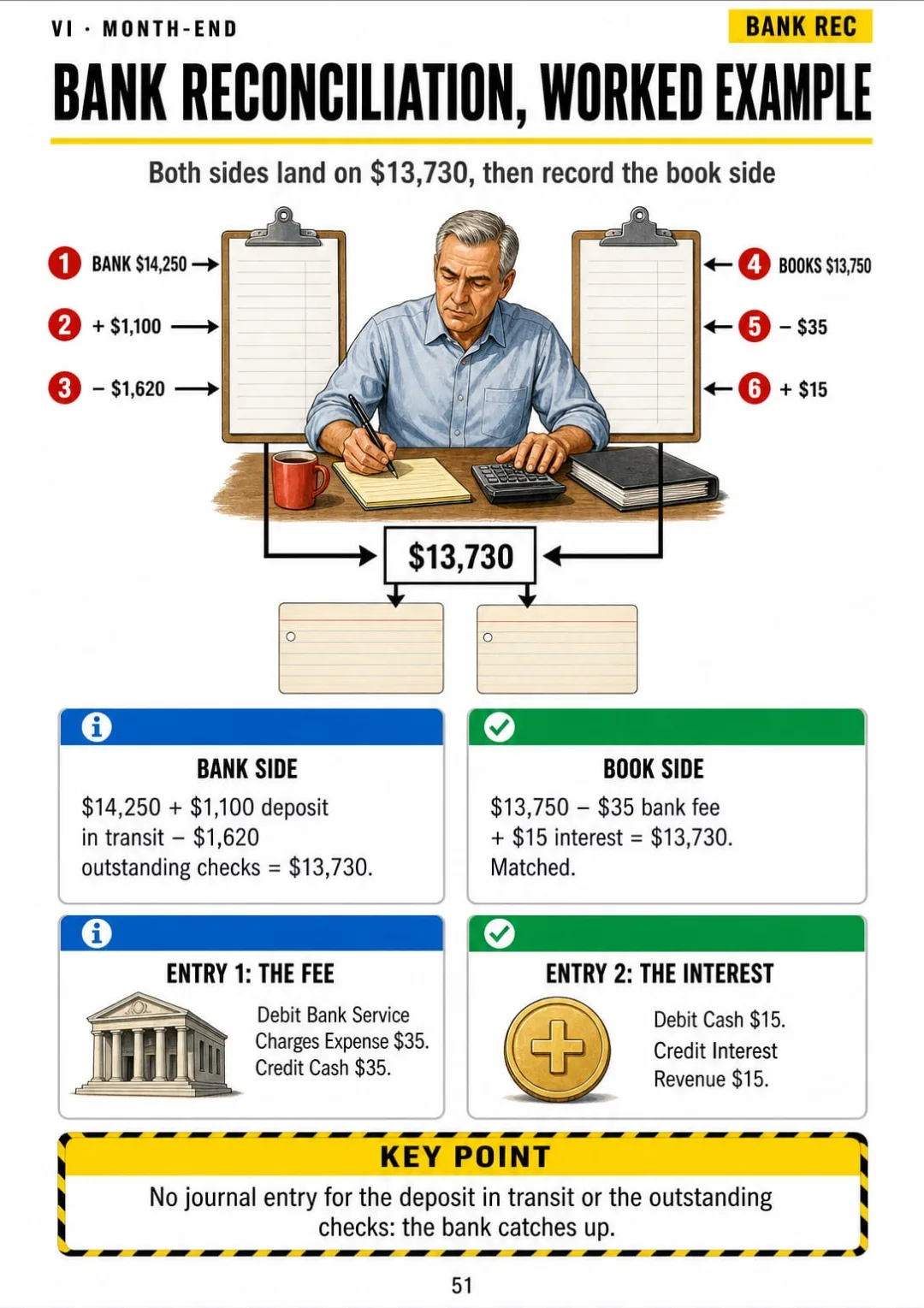
$14,250 + $1,100 − $1,620 = $13,730 = $13,750 − $35 + $15
$14,250 + $1,100 − $1,620 = $13,730 = $13,750 − $35 + $15
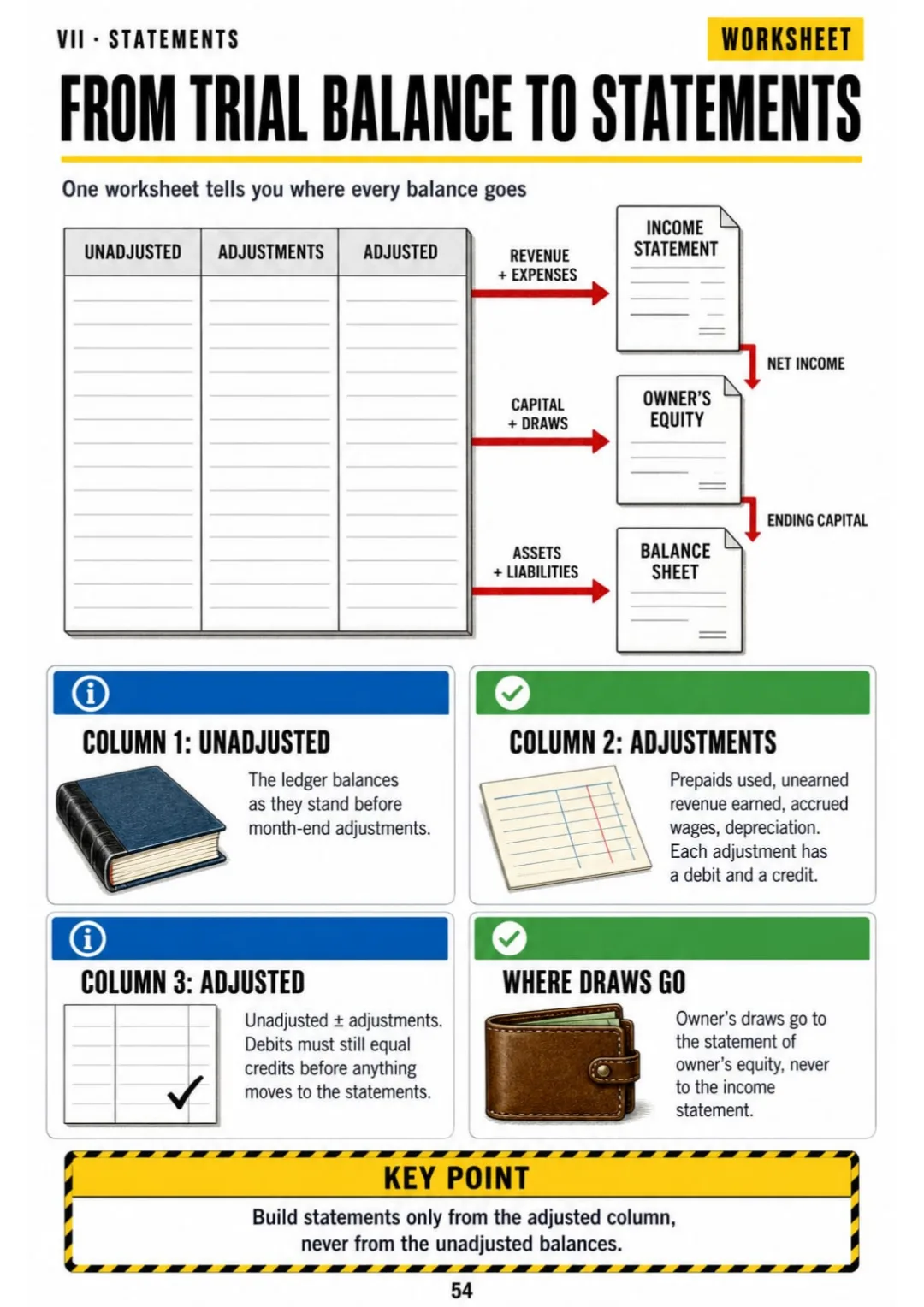
Unadjusted → adjustments → adjusted → income statement, owner's equity, balance sheet
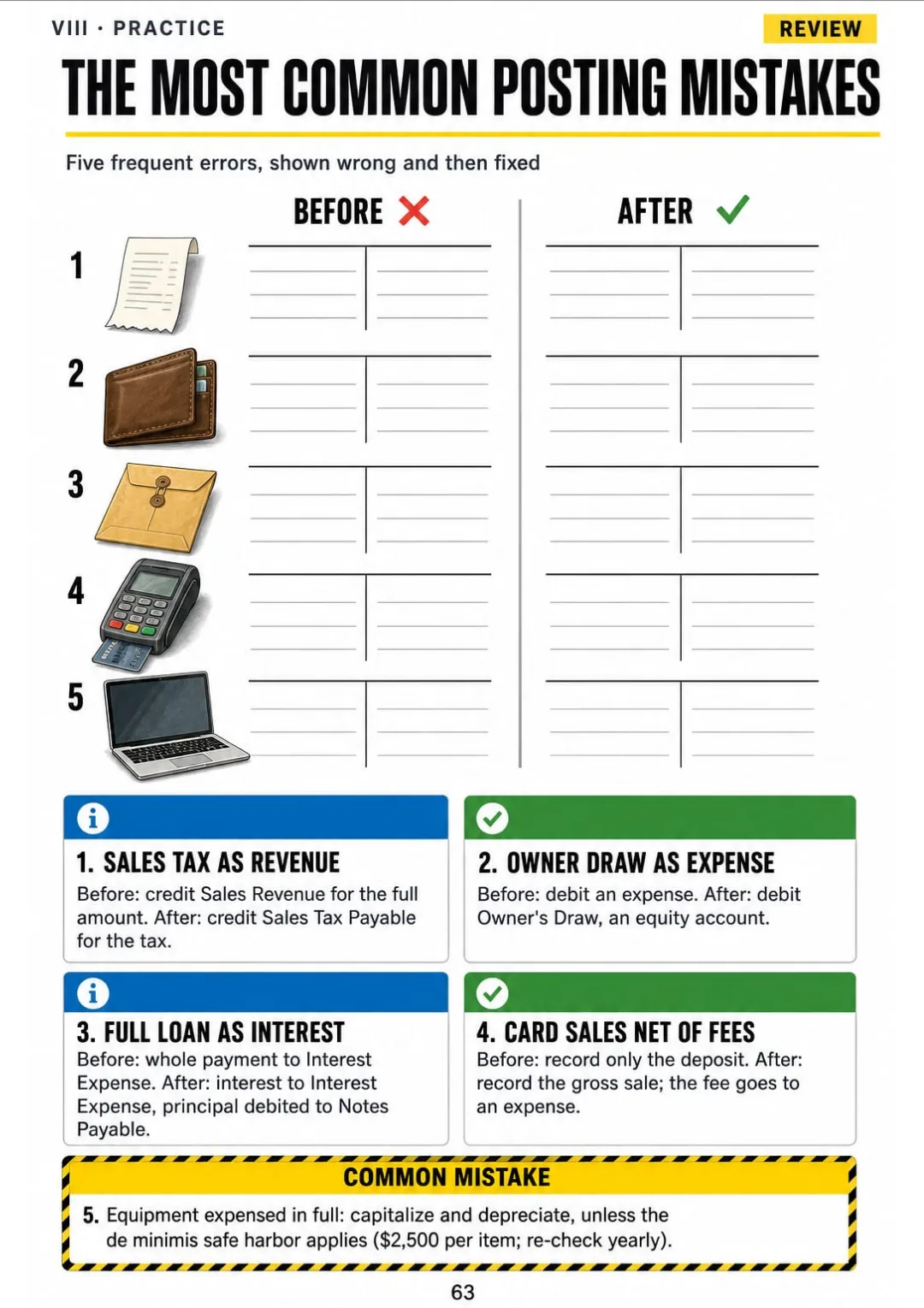
Sales tax, draws, loans, card fees and equipment: before and after, one line each
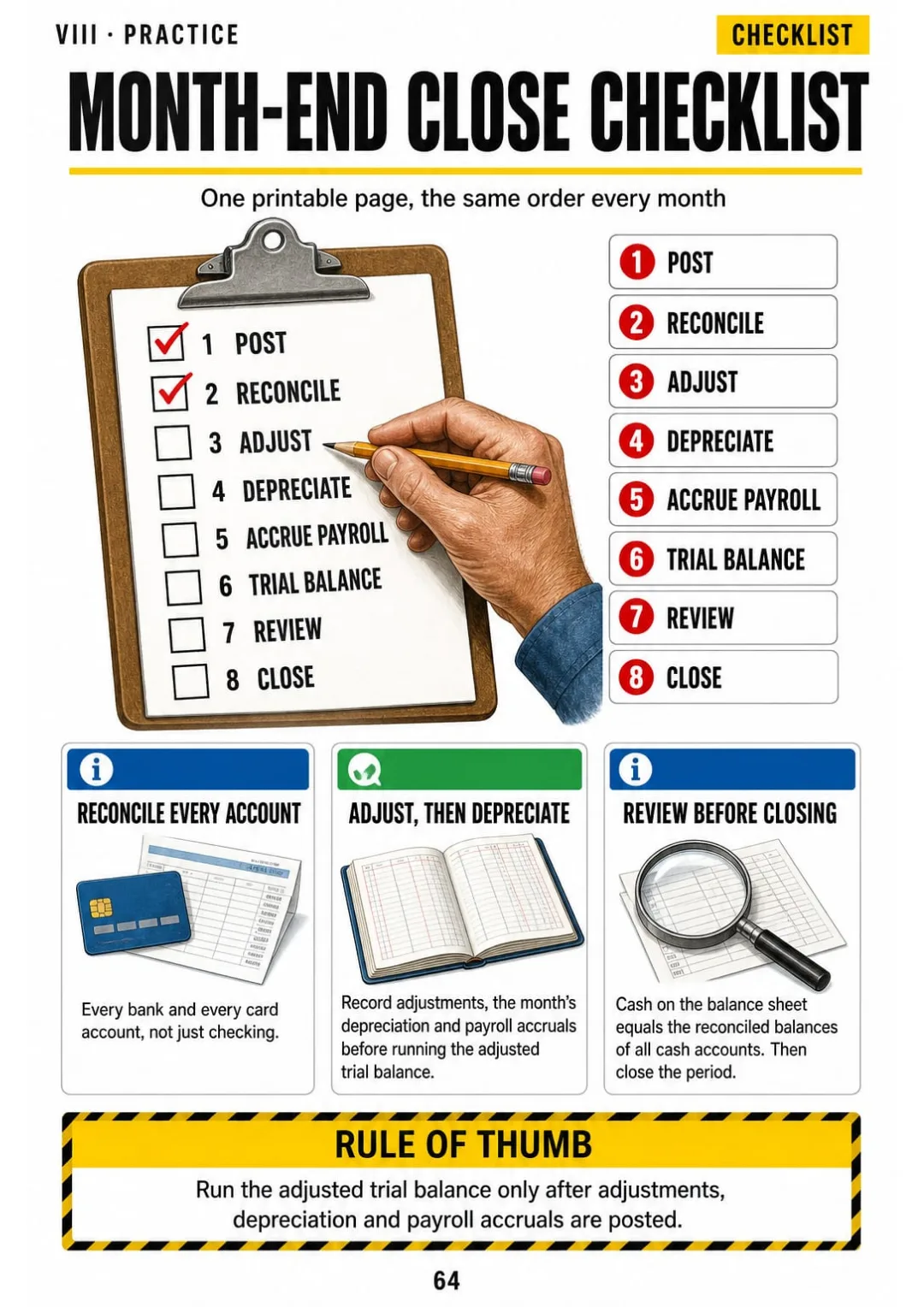
Post, reconcile, adjust, depreciate, accrue, trial balance, review, close: one printable page

Swipe to see more →

These are real pages from the book. The table of contents is the full one: 8 parts and 61 topics.

The Problem Isn't You. It's How It Was Explained.

It's Thursday night and payroll runs tomorrow. You're looking at one employee's gross pay of $1,000, and you don't know which line comes off first.

The manual explains it in paragraphs: federal withholding in one chapter, FICA three pages later, state tax in a footnote. Each piece makes sense on its own. Put together, they don't add up.

Gross $1,000 − tax, FICA, state, deductions = net $788.50

In this book, gross to net is one page. A drawing takes the $1,000 down line by line: federal tax, Social Security, Medicare, state, deductions, until $788.50 is left. The worked example sits right next to it.

Every other topic works the same way: the T-account, sales tax, straight-line depreciation, the bank reconciliation and closing entries each have their own page.

So next payday you follow the same lines in the same order, and the net check comes out right without opening the manual again.

COMPARE FOR YOURSELF

The Same Topic, Two Ways to Study It

THIS
  • The textbook: line after line
  • Debits and credits explained only in words
  • You sit down to post, still unsure
In recording any transaction under the double-entry system, the bookkeeper must first identify each account affected by the economic event, subsequently classify said accounts according to their nature as assets, liabilities, owner's equity, revenues or expenses, then determine whether the balance of each account is increased or decreased as a result of the transaction, and finally apply the corresponding debit or credit in accordance with the normal balance of the account type, bearing in mind that total debits must equal total credits in every entry recorded.
FOR THIS
  • The 4-step method in one drawing
  • The steps in a box, always in order
  • You see it, and it makes sense
4 boxes used on every page: which accounts, what type, up or down, debit or credit
CONTENTS

Take a Look at the 8 Parts and 61 Topics

The foundations, the 4-step method, sales and cash, payroll, assets and depreciation, month-end adjustments and reconciliation, the trial balance and statements, and practice and review: 65 pages, all illustrated.

IThe Foundations · pp. 5-12
  1. What Bookkeeping Actually Does
  2. The Accounting Equation as a Scale
  3. The Five Account Types
  4. The Chart of Accounts
  5. The T-Account
  6. Normal Balances: Which Side Grows
  7. Cash Basis vs Accrual Basis
  8. Source Documents and Record Keeping
IIThe 4-Step Method · pp. 13-19
  1. The 4 Steps, Always in the Same Order
  2. Step 1: Find the Accounts That Move
  3. Steps 2 and 3: Type and Direction
  4. Step 4: Turn It Into Debit and Credit
  5. Writing a Journal Entry Correctly
  6. Compound Entries
  7. From Journal to General Ledger
IIISales, Purchases and Cash · pp. 20-28
  1. Cash Sales and Sales on Account
  2. Sales Tax Is Not Your Revenue
  3. Remitting Sales Tax and Nexus in Outline
  4. Customer Refunds and Returns
  5. Purchases and Accounts Payable
  6. Inventory in Outline: Perpetual vs Periodic
  7. Bank Fees, Interest and Card Processing
  8. Owner Contributions and Owner Draws
  9. Petty Cash
IVPayroll from Gross to Net · pp. 29-36
  1. Employee or Independent Contractor
  2. Gross Pay: Hourly, Salaried, Overtime
  3. The W-4 and Federal Income Tax Withholding
  4. FICA: Social Security and Medicare
  5. From Gross to Net, Line by Line
  6. Recording the Payroll Entry
  7. FUTA and State Unemployment in Outline
  8. Deposits and the Payroll Calendar
VAssets, Loans and Depreciation · pp. 37-43
  1. Expense It or Capitalize It
  2. Recording a Fixed Asset Purchase
  3. Straight-Line Depreciation
  4. Accumulated Depreciation and Book Value
  5. Book vs Tax Depreciation in Outline
  6. Loans: Principal vs Interest
  7. Selling or Retiring an Asset
VIMonth-End: Adjustments and Reconciliation · pp. 44-52
  1. Why Adjusting Entries Exist
  2. Prepaid Expenses: Rent and Insurance
  3. Unearned Revenue
  4. Accrued Expenses: Wages Not Yet Paid
  5. Accrued Revenue
  6. Bad Debts in Outline
  7. The Bank-to-Books Bridge
  8. Bank Reconciliation Worked Example
  9. When the Reconciliation Won't Balance
VIITrial Balance and Statements · pp. 53-59
  1. The Unadjusted Trial Balance
  2. From Adjusted Trial Balance to Statements
  3. The Income Statement
  4. Statement of Owner's Equity
  5. The Balance Sheet
  6. Closing Entries
  7. Correcting Entries
VIIIPractice and Review · pp. 60-65
  1. Graded Exercises 1-10: Basic Entries
  2. Graded Exercises 11-20: Payroll and Assets
  3. Graded Exercises 21-30: Month-End Close
  4. The Most Common Posting Mistakes
  5. Month-End Close Checklist
  6. Year-End Checklist and What to Re-Check Each Year

One Page, One Topic, All Clear

Think of it this way:

It's the last day of the month. The bank shows one balance, your books show another, and you need them to match before you close.

You open the bank reconciliation page and see the bank-to-books bridge drawn out: deposits in transit and outstanding checks on the bank side, bank charges and interest on the books side, both landing on the same number.

$14,250 + $1,100 − $1,620 = $13,730 = $13,750 − $35 + $15

Same with the T-account, payroll from gross to net, straight-line depreciation, prepaid rent and closing entries: each one on its own page.

Bookkeeping Workbook, Illustrated is 8 parts and 61 topics, all drawn, with 30 graded exercises, the most common posting mistakes and two checklists at the end.

What you see drawn, you don't have to memorize.

What's Inside Bookkeeping Workbook, Illustrated:

Ipp. 5-12

The Foundations

What bookkeeping does, the accounting equation as a scale, the five account types, the chart of accounts, the T-account, normal balances, cash vs accrual and the records to keep.

IIpp. 13-19

The 4-Step Method

The 4 steps in the same order every time, finding the accounts that move, type and direction, debit or credit, writing the entry, compound entries and posting to the ledger.

IIIpp. 20-28

Sales, Purchases and Cash

Cash and credit sales, sales tax as a liability, the basics of remitting and nexus, refunds, purchases and payables, inventory basics, bank charges, owner contributions and draws, and petty cash.

IVpp. 29-36

Payroll from Gross to Net

Employee or contractor, hourly, salaried and overtime pay, the W-4 and withholding, Social Security and Medicare, gross to net line by line, the payroll entry, an overview of unemployment taxes and the deposit calendar.

Vpp. 37-43

Assets, Loans and Depreciation

Expense or capitalize, recording a fixed asset, straight-line depreciation, accumulated depreciation and book value, a quick look at book vs. tax, loan principal vs. interest and retiring an asset.

VIpp. 44-52

Month-End: Adjustments and Reconciliation

Why adjusting entries exist, prepaid rent and insurance, unearned revenue, accrued wages and revenue, an overview of bad debts, the bank-to-books bridge, a worked reconciliation and what to check when it won't balance.

VIIpp. 53-59

Trial Balance and Statements

The unadjusted trial balance, from adjusted trial balance to statements, the income statement, owner's equity, the balance sheet, closing entries and correcting entries.

VIIIpp. 60-65

Practice and Review

30 graded exercises with full solutions, the most common posting mistakes, the month-end close checklist and what to re-check each year.

At the end of the book: 30 graded exercises with full solutions, the most common posting mistakes, and month-end and year-end checklists.


Plus: 2 Free Books

Journal Entry Drills: 40 Extra Entries, Fully Solved

BONUS 1: «Journal Entry Drills: 40 Extra Entries, Fully Solved»

Value on its own: US$ 17.90

More reps on the entries that trip people up (refunds, owner draws, loan payments, prepaid rent), each with the answer laid out line by line so you can check yourself.

Month-End Quick Sheets: the Common Mistakes, Before and After

BONUS 2: «Month-End Quick Sheets: the Common Mistakes, Before and After»

Value on its own: US$ 14.90

One-page sheets to keep next to you at month-end: the most common posting mistakes shown wrong and then fixed, so you spot them before the trial balance does.

Bookkeeping Workbook, Illustrated with 2 Free Books

  • Bookkeeping Workbook, Illustrated: 65 illustrated pagesUS$ 63
  • BONUS 1: Journal Entry Drills: 40 Extra Entries, Fully SolvedUS$ 17.90
  • BONUS 2: Month-End Quick Sheets: the Common Mistakes, Before and AfterUS$ 14.90
  • High-resolution PDF to printIncluded
Total value US$ 95.80
YOUR PRICE:
US$ 27
You save US$ 68.80
YES, I WANT BOOKKEEPING WORKBOOK, ILLUSTRATED FOR US$ 27

📄 This is a digital PDF book sent to your email: nothing is printed or shipped.

Secure purchaseEncrypted payment30-day guarantee

PDF by email: We email you Bookkeeping Workbook, Illustrated as a PDF, together with the two free books. It's a single payment: no installments, no extra charges.

Who This Book Is For

You're changing careers into bookkeeping

You're changing careers into bookkeeping

You had a different job before this, and now it's night classes and practice sets. Every entry is worked line by line with the same 4 steps, so the homework stops feeling like guesswork.

You're starting out as a bookkeeper

You're starting out as a bookkeeper

Your first client or job, with real statements in front of you. Payroll, reconciliation and the trial balance each on one page you can open while you work.

You keep your own business's books

You keep your own business's books

Sales, purchases, draws, payroll and bank charges posted in the same order every month, so you understand your own numbers without calling someone each time.

Everything You Get Today

US$ 95.80US$ 27
YES, I WANT BOOKKEEPING WORKBOOK, ILLUSTRATED FOR US$ 27

📄 This is a digital PDF book sent to your email: nothing is printed or shipped.

30DAYS
GUARANTEE

30-Day Guarantee

Try Bookkeeping Workbook, Illustrated for 30 days, bonus books included.

We refund everything if the file won't open, if the book isn't what you see here, if you were charged twice or if the email doesn't arrive. Just email us.

You pay once. No subscriptions.

Frequently Asked Questions

Is it for me if I know the theory but freeze when I post real entries?

Yes. If you already know the theory, go straight to the 4-step method in Part II: every topic has a worked example, and the 30 exercises in Part VIII come with full solutions. If you're new, it starts from the accounting equation and the T-account.

Where does the content come from?

From current IRS publications (payroll, small business, records, depreciation), state revenue departments for sales tax and the FASB Codification for accrual concepts. The method itself (debits and credits, reconciliation, adjusting and closing entries) doesn't change from year to year. Rates, thresholds, deadlines and forms do, so each one is flagged on its page to check against the current official version, and Part VIII has a page on what to re-check every year.

Is this official material?

No. It's an independent study and practice book. It is not affiliated with or endorsed by the IRS, any state agency or the FASB.

Does it replace a course or an accountant?

No. It's practice material to understand and post entries. It doesn't come with a certificate, it doesn't replace formal training or a CPA, and it isn't individual tax advice.

Are the practice exercises taken from an exam or a course?

No. All 30 exercises and the bonus drills are written for this book, for the United States: US dollars, the W-4 and Form 941, Social Security and Medicare, state sales tax and state payroll tax. It is not a translated UK book.

When and how do I get it?

As a PDF by email, sent to the address you enter at checkout. The two bonus books come the same way.

Do I have to pay every month?

No. It's a one-time payment. No subscription.

Can I have it on paper?

Yes. The PDF is printable, so you can print the exercises and work them by hand.

How does the refund work?

You have 30 days. We refund everything if the file won't open, if the book isn't what you see on this page, if you were charged twice or if the email doesn't arrive: just email us.

Before You Close This Page

No more rereading the chapter and still posting it wrong.

Gross to net: you see it drawn, and you're done.

You sit down at month-end knowing where every entry goes.

Drawings make studying faster.

The book is right below.

One-time payment: US$ 27 · Guarantee: 30 days · PDF by email

YES, I WANT BOOKKEEPING WORKBOOK, ILLUSTRATED FOR US$ 27

📄 This is a digital PDF book sent to your email: nothing is printed or shipped.